Same Day Emergency Dentistry!


Bridges
Schedule Appointment
Dental Bridges
A missing tooth does more damage than most people realize. Beyond the visible gap, it can cause neighboring teeth to shift, alter your bite, accelerate bone loss in the jaw, and place uneven stress on surrounding teeth. A dental bridge fills that gap permanently — restoring your smile, your bite, and the structural integrity of your surrounding teeth all at once.
How a Dental Bridge Works
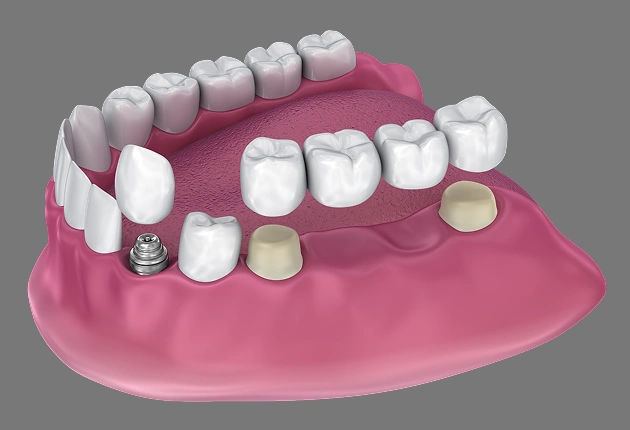
A traditional dental bridge consists of one or more artificial teeth called pontics, held in place by crowns that are cemented onto the natural teeth on either side of the gap. These anchor teeth, known as abutments, support the bridge and keep it firmly in position. The result is a fixed, non-removable restoration that looks and functions like your natural teeth.
Is a Bridge Right for You
A dental bridge may be the right solution if you:
- Have one or more consecutive missing teeth with healthy natural teeth on either side
- Want a fixed restoration that doesn't need to be removed for cleaning
- Are looking for a faster alternative to dental implants
- Have experienced shifting or bite changes as a result of tooth loss
- Want to restore the appearance of your smile without a removable appliance
What to Expect During the Bridge Process
Getting a dental bridge is a straightforward process completed over two to three appointments. Here's what's involved:
- Evaluation — We examine the gap, surrounding teeth, and your bite to confirm a bridge is the most suitable option for your situation.
- Abutment Preparation — The anchor teeth on either side of the gap are carefully shaped to accommodate the crowns that will hold the bridge in place.
- Impressions — Detailed impressions are taken so the bridge can be custom-fabricated to fit your mouth precisely.
- Temporary Bridge — A temporary bridge is placed to protect the prepared teeth while your permanent restoration is being made.
- Permanent Placement — Your custom bridge is fitted, adjusted for bite and appearance, and permanently cemented into place.
- Follow-up — We confirm everything is fitting well and walk you through how to care for your bridge at home.
Is a Dental Bridge the Right Choice for You
A dental bridge is a proven, reliable way to replace missing teeth and prevent the chain of complications that tooth loss sets in motion. If you're living with a gap in your smile, our team can help you determine whether a bridge is the right solution for your situation.
FAQs
Dental bridges typically last between 10 and 15 years, depending on the material used and how well you care for your bridge. Proper oral hygiene, including regular brushing, flossing, and dental check-ups, can help prolong the lifespan of your bridge.
Getting a dental bridge typically requires two visits. During the first visit, your dentist will prepare the abutment teeth (the adjacent teeth that support the bridge) by reshaping them. Impressions are taken to create a custom bridge, and a temporary bridge is placed. At the second visit, your permanent bridge is fitted and cemented into place.
Yes, you can eat with a dental bridge, but it’s important to avoid biting directly into hard or sticky foods to prevent damaging the bridge. With proper care and maintenance, your bridge should function just like your natural teeth.
To care for your dental bridge, brush and floss regularly, making sure to clean under the bridge to prevent plaque buildup. Your dentist may recommend a special floss threader or water flosser to help clean areas around the bridge. Regular dental visits are also important to ensure the bridge remains secure.
Yes, once fitted properly, dental bridges should feel comfortable and natural. If you experience any discomfort or difficulty chewing, it’s important to contact your dentist for an adjustment.
New Patients & Emergency Appointments Welcome!
Schedule Appointment
Call Us